
Simplifying Cross-Chain Trading with Intelligent Route Selection
UX REVIEW
UI REVAMP
WEB3
BRANDING
100+
100+
Blockchains
$4.5B
$4.5B
Transaction Volume
330
330
Total DEXs
KOI's design foundation made cross-chain complexity accessible and intuitive, helping establish Rubic's competitive position in a crowded market. Today, Rubic has evolved into a leading cross-chain infrastructure platform, supporting over 100+ blockchains and processing $4.4 billion in cumulative transaction volume.
The Challenge We Tackled Together
01
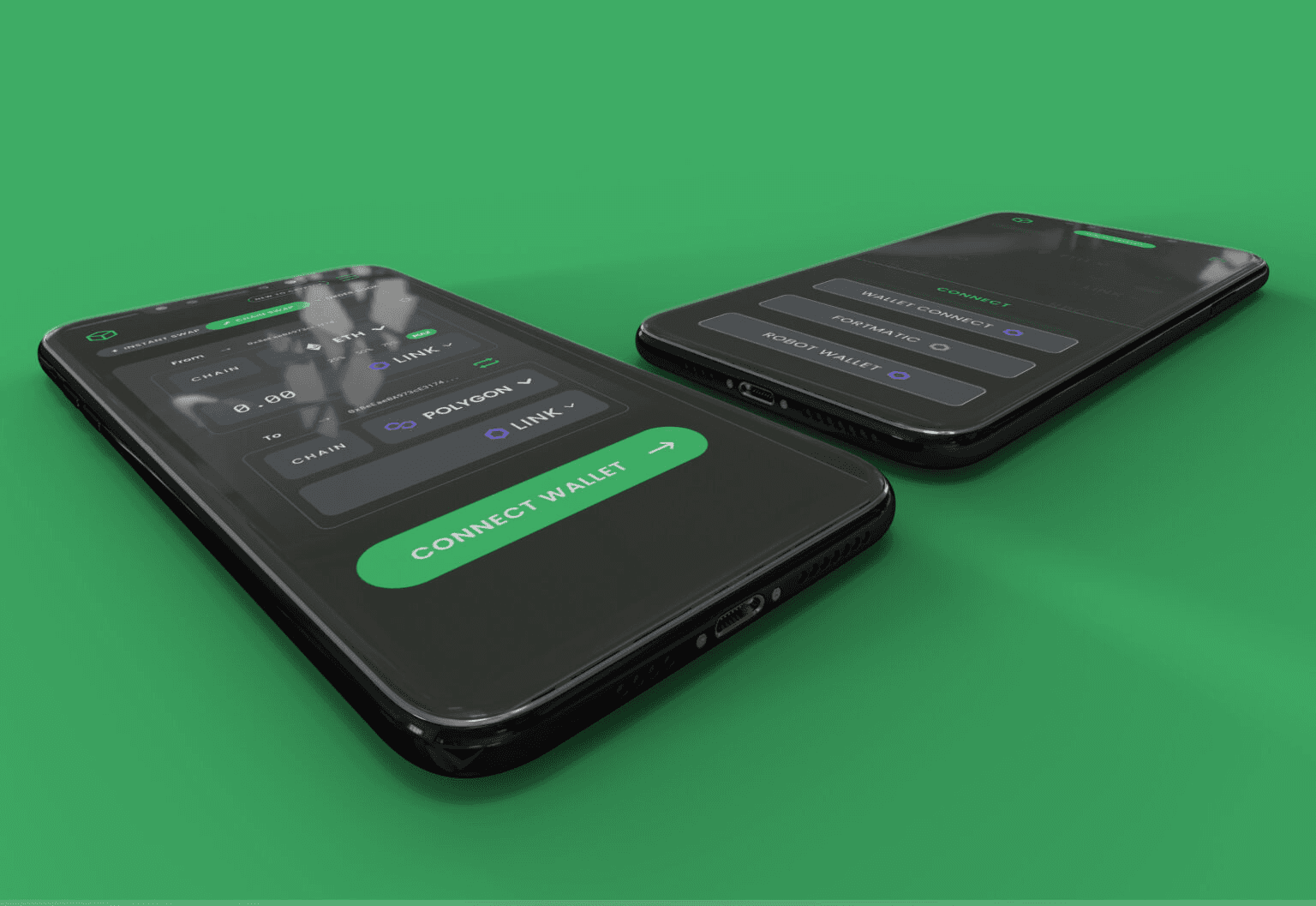
Rubic Exchange was pioneering cross-chain cryptocurrency trading at a time when moving assets between blockchains was technically complex and intimidating for average users. Each blockchain operated independently with different protocols, gas fees, and transaction times. Users who wanted to swap tokens across chains faced a daunting decision: which bridge should they use? Which route would be fastest? Most cost-effective?
Without clear guidance, users either abandoned transactions entirely or made suboptimal choices that resulted in high fees, long wait times, or failed transactions. The technical barrier of cross-chain interoperability was being passed directly to end users who lacked the expertise to navigate it.
How We Made It Happen
02

We analyzed user behavior patterns and common drop-off points in the swap flow. We also studied how users interacted with competing platforms and gathered feedback from the Rubic community.
Key findings emerged: experienced crypto traders wanted granular control and transparency into route options, gas costs, and estimated completion times. However, the majority of users (especially those newer to DeFi) felt overwhelmed by technical jargon and simply wanted their swap to "just work." Many users didn't understand the difference between bridges, liquidity pools, or cross-chain messaging protocols. They just wanted to get from Token A on Chain X to Token B on Chain Y as smoothly as possible.
User Stories
03
As a new DeFi user, I want to swap tokens across chains without needing to understand bridges or routing, so I can complete my transaction confidently.
As an experienced trader, I want visibility into different route options and their trade-offs, so I can make informed decisions based on my priorities (speed vs. cost).
As any user, I want to trust that the platform will find me a reliable route, so I don't end up with a failed transaction or stuck funds.
What We Achieved Together
04
The core insight was that route selection shouldn't be a user burden. It should be surfaced through clear, intuitive design.
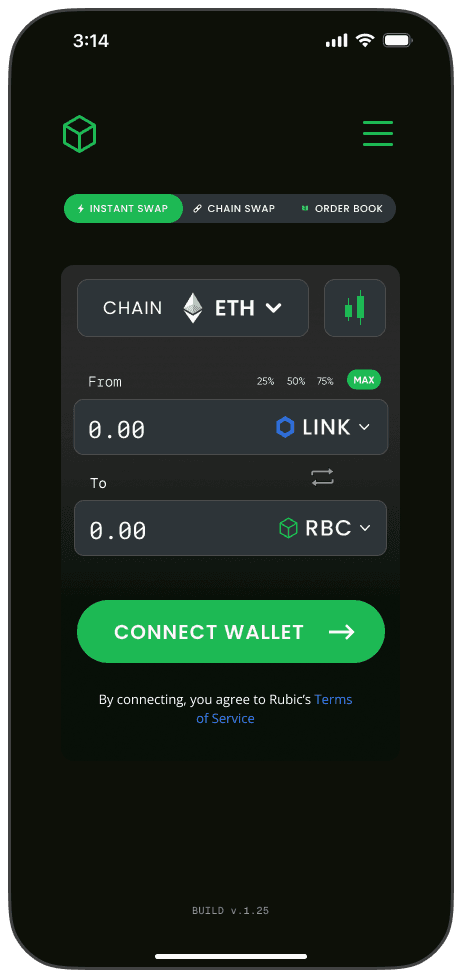
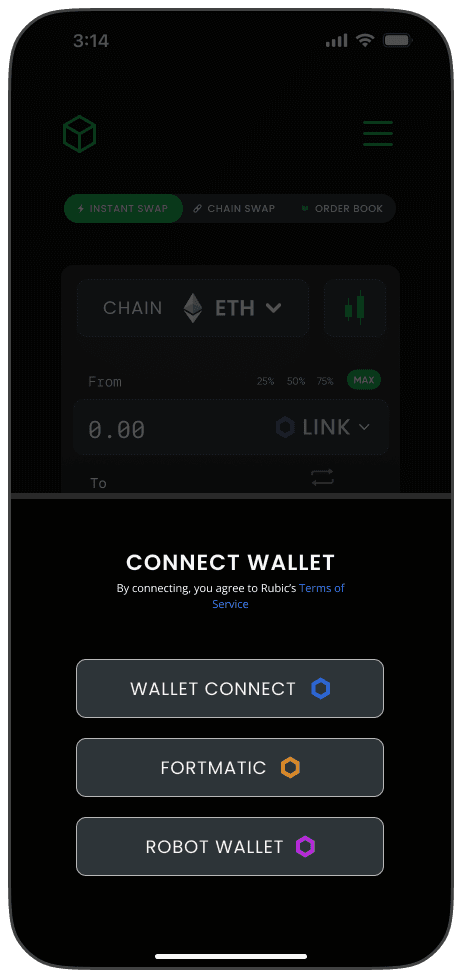
We redesigned the swap interface to prioritize the automated route recommendation while keeping complexity optional. The default experience became streamlined: users see their source and destination tokens with a recommended route clearly displayed, reducing cognitive load and decision paralysis.
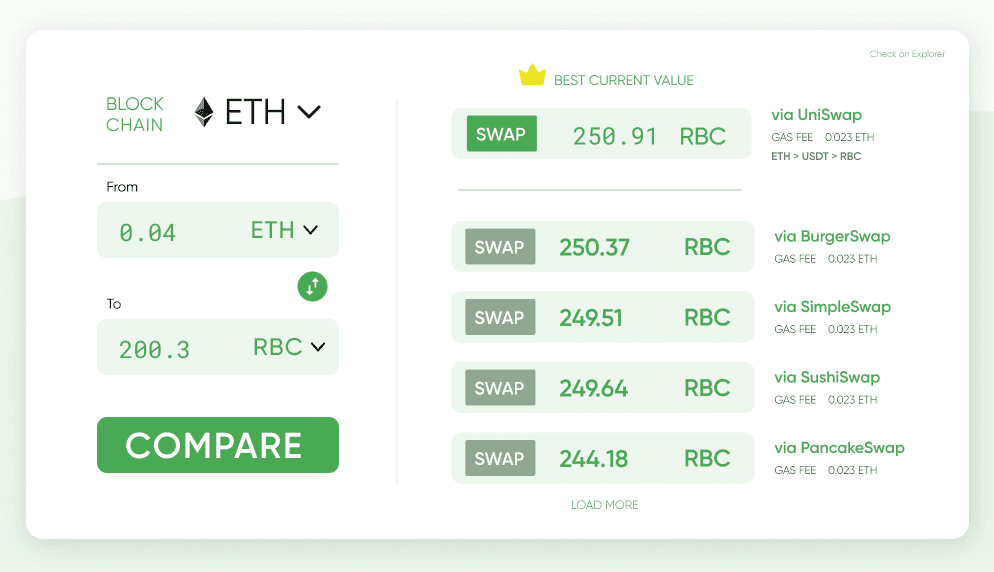
For power users, we designed an advanced view that surfaced alternative routes with clear visual comparisons: estimated time, total cost breakdown, and bridge provider. This gave experienced traders control without forcing complexity on everyone.
The interface focused on progressive disclosure: showing users what they needed to know when they needed it, while keeping advanced options accessible but not overwhelming.
Impact & Press
05
Today, Rubic has grown into a major cross-chain infrastructure player, supporting over 100 blockchains and facilitating $4.4 billion in accumulated transaction volume. While the platform has evolved significantly since, the foundation of making cross-chain complexity accessible helped establish their position in the space.
KOI's design foundation made cross-chain complexity accessible and intuitive, helping establish Rubic's competitive position in a crowded market. Today, Rubic has evolved into a leading cross-chain infrastructure platform, supporting over 100+ blockchains and processing $4.4 billion in cumulative transaction volume.
01
The Challenge We Tackled Together
Rubic Exchange was pioneering cross-chain cryptocurrency trading at a time when moving assets between blockchains was technically complex and intimidating for average users. Each blockchain operated independently with different protocols, gas fees, and transaction times. Users who wanted to swap tokens across chains faced a daunting decision: which bridge should they use? Which route would be fastest? Most cost-effective?
Without clear guidance, users either abandoned transactions entirely or made suboptimal choices that resulted in high fees, long wait times, or failed transactions. The technical barrier of cross-chain interoperability was being passed directly to end users who lacked the expertise to navigate it.
02
How We Made It Happen
We analyzed user behavior patterns and common drop-off points in the swap flow. We also studied how users interacted with competing platforms and gathered feedback from the Rubic community.
Key findings emerged: experienced crypto traders wanted granular control and transparency into route options, gas costs, and estimated completion times. However, the majority of users (especially those newer to DeFi) felt overwhelmed by technical jargon and simply wanted their swap to "just work." Many users didn't understand the difference between bridges, liquidity pools, or cross-chain messaging protocols. They just wanted to get from Token A on Chain X to Token B on Chain Y as smoothly as possible.
03
User Stories
As a new DeFi user, I want to swap tokens across chains without needing to understand bridges or routing, so I can complete my transaction confidently.
As an experienced trader, I want visibility into different route options and their trade-offs, so I can make informed decisions based on my priorities (speed vs. cost).
As any user, I want to trust that the platform will find me a reliable route, so I don't end up with a failed transaction or stuck funds.
04
What We Achieved Together
The core insight was that route selection shouldn't be a user burden. It should be surfaced through clear, intuitive design.
We redesigned the swap interface to prioritize the automated route recommendation while keeping complexity optional. The default experience became streamlined: users see their source and destination tokens with a recommended route clearly displayed, reducing cognitive load and decision paralysis.
For power users, we designed an advanced view that surfaced alternative routes with clear visual comparisons: estimated time, total cost breakdown, and bridge provider. This gave experienced traders control without forcing complexity on everyone.
The interface focused on progressive disclosure: showing users what they needed to know when they needed it, while keeping advanced options accessible but not overwhelming.
05
Impact & Press
Today, Rubic has grown into a major cross-chain infrastructure player, supporting over 100 blockchains and facilitating $4.4 billion in accumulated transaction volume. While the platform has evolved significantly since, the foundation of making cross-chain complexity accessible helped establish their position in the space.
WEB3 UX REVAMP
WEB3 UX REVAMP